The rise of Power-Assisted Steering
The Evolution of Marine Steering and the Rise of Power-Assisted Steering
Standing at the helm of a boat has always been about control, awareness, and confidence on the water. Whether navigating open seas, maneuvering through marinas, or handling a powerful boat in changing conditions, the steering system plays a critical role in how a boat responds to the captain’s commands.
Over the years, marine technology has evolved dramatically. Engines have become more powerful, boats have grown larger, and expectations around comfort and performance have increased. With these changes, steering systems have also progressed—from simple mechanical systems to advanced hydraulic technology.
Today, the marine industry is entering another stage of evolution. Boat owners, builders, and operators are increasingly looking for steering systems that offer smoother control, precision, and reduced effort at the helm. This shift has led to the development of power-assisted steering systems, designed to enhance the overall boating experience.
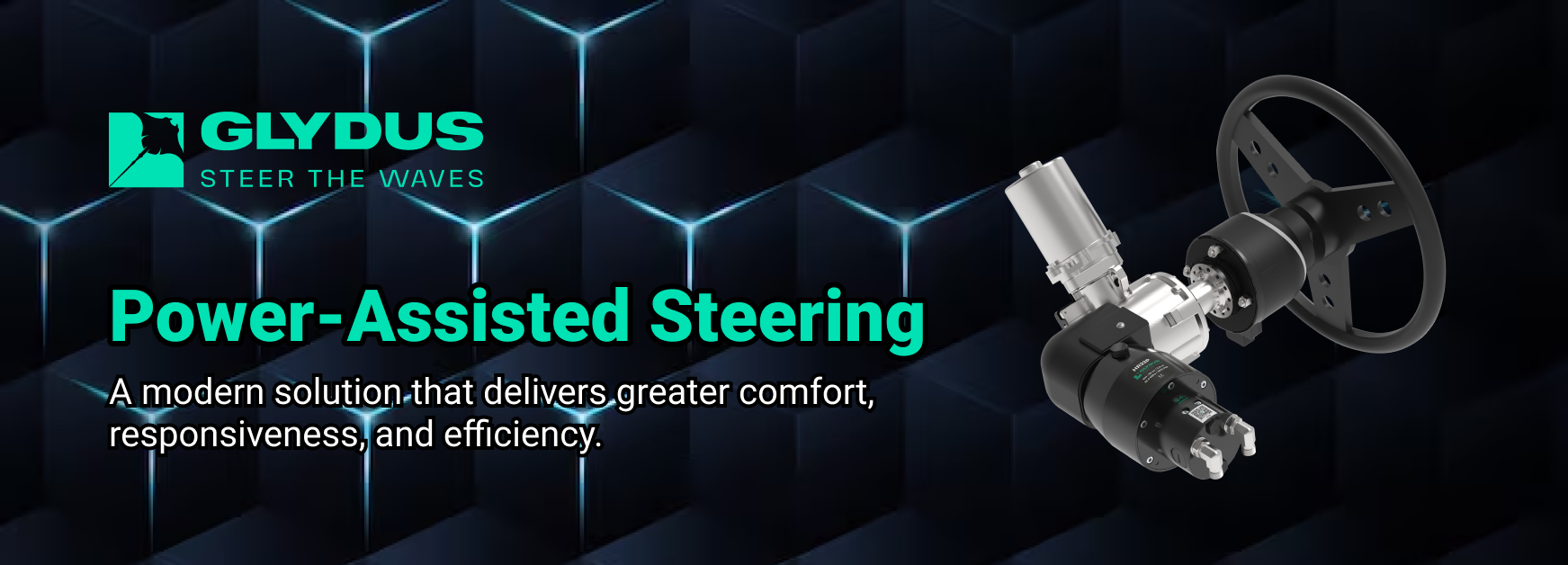
Among the innovators in this field is Glydus, a manufacturer known for its engineering-driven approach to marine steering technology. The Glydus Power-Assisted Steering System is a modern solution that delivers greater comfort, responsiveness, and efficiency in boat control.
The Early Days of Boat Steering Systems
To understand where modern steering technology stands today, it helps to look at how boat steering originally developed.
In earlier times, most small boats relied on tiller steering, where the operator controlled the rudder directly through a lever connected to the steering mechanism. This method worked well for smaller boats but required physical effort and offered limited control for larger boats.
As boats became more sophisticated and engine power increased, mechanical steering systems were introduced. These systems used cables and gears connected to a steering wheel at the helm. The rotation of the wheel would transmit motion through cables to move the rudder or outboard engine.
Mechanical steering improved usability, but it still depended heavily on the operator’s physical input. For boats with larger engines or higher torque loads, steering effort could increase significantly.
The next major advancement came with hydraulic steering systems. Hydraulic steering replaced mechanical cables with hydraulic fluid and cylinders, allowing steering movement to be transmitted more smoothly and efficiently. This innovation reduced friction, improved reliability, and became widely adopted across the marine industry.
For decades, hydraulic steering remained the standard solution for recreational and commercial boats.
The Current Landscape of Marine Steering
Even today, a large number of boats around the world operate with conventional hydraulic steering systems. These systems are reliable, widely understood, and compatible with a wide range of boats.
However, the marine environment continues to evolve.
Modern boats are equipped with increasingly powerful engines, and boat sizes continue to grow. With higher horsepower engines, the forces acting on the steering system also increase. As a result, steering effort at the helm can become noticeable, particularly during low-speed maneuvering or extended navigation.
For operators who spend long hours on the water—whether recreational boaters, fishing professionals, or marine operators—comfortable and responsive steering is an important part of the overall experience.
As expectations rise, the marine industry naturally looks for technologies that can enhance comfort while maintaining precise control. This is where power-assisted steering technology begins to play a significant role.
Industry-First Innovation in Marine Steering
The Glydus Power-Assisted Steering System has been developed to bring a new level of ease and responsiveness to marine steering.
Unlike traditional hydraulic systems that rely solely on manual input at the helm, the Glydus system integrates power assistance that supports the steering movement. This assistance provides additional torque to the steering mechanism, allowing the wheel to turn more smoothly while maintaining accurate control.
The benefit of this approach is immediately noticeable at the helm. Steering becomes lighter, smoother, and more responsive, enabling operators to guide the boat with confidence and precision.
Instead of focusing on steering effort, captains can concentrate fully on navigation and boat handling.
The system has been engineered with marine practicality in mind, ensuring reliable operation across a wide range of boats and marine conditions.
Learn more about Glydus Power-Assisted Steering
The Glydus Power-Assisted Steering System has been developed to bring a new level of ease and responsiveness to marine steering.
Unlike traditional hydraulic systems that rely solely on manual input at the helm, the Glydus system integrates power assistance that supports the steering movement. This assistance provides additional torque to the steering mechanism, allowing the wheel to turn more smoothly while maintaining accurate control.
The benefit of this approach is immediately noticeable at the helm. Steering becomes lighter, smoother, and more responsive, enabling operators to guide the boat with confidence and precision.
Instead of focusing on steering effort, captains can concentrate fully on navigation and boat handling.
The system has been engineered with marine practicality in mind, ensuring reliable operation across a wide range of boats and marine conditions.
Advantages of Glydus Power-Assisted Steering
Modern marine operators expect systems that improve both performance and comfort. Glydus power-assisted steering delivers several advantages that support these expectations.
Effortless Steering Control
Power assistance significantly reduces the effort required to turn the steering wheel. This allows operators to handle boats with greater ease, particularly when managing larger engines or navigating tight spaces.
Improved Steering Precision
With smoother wheel movement and responsive feedback, captains can achieve more accurate steering control. This precision becomes particularly valuable during docking, manoeuvring, and navigating busy waterways.
Enhanced Maneuverability
Power-assisted steering supports quick and controlled adjustments, allowing the boat to respond more efficiently to steering input.
Reduced Operator Fatigue
Long hours at the helm can place strain on operators when steering systems require constant physical effort. By reducing steering load, power-assisted technology helps maintain comfort during extended navigation.
Reliable Marine Performance
Every Glydus steering system is designed specifically for marine environments, using engineering principles that support durability, reliability, and long-term operation.
Together, these advantages help create a smoother and more confident steering experience.
A Global Presence in Marine Steering
Glydus has grown into a globally recognized name in marine steering technology. Today, its steering systems are supplied to more than 70 countries worldwide, supporting a wide network of boat builders, marine professionals, and distributors. This international presence reflects the company’s commitment to delivering dependable steering solutions across diverse marine markets. Through a well-established global distributorship network, Glydus products are accessible to marine industries around the world, ensuring availability, support, and consistent service.
Manufacturing Excellence at Glydus
Behind every Glydus steering system is a strong focus on engineering and manufacturing quality.
The company operates its own manufacturing facility, where advanced production techniques and strict quality standards are applied to every product. Controlling the manufacturing process allows Glydus to maintain consistency, precision, and reliability in each steering system produced.
Equally important is the team behind the technology.
Glydus is supported by a dedicated team of engineers and technical experts who work closely with customers, distributors, and marine professionals. Their expertise ensures that users receive accurate guidance, product knowledge, and support whenever needed.
This combination of manufacturing capability and technical expertise helps ensure that Glydus steering systems meet the expectations of modern marine operators.
Steering Toward the Future of Marine Navigation
The marine industry continues to evolve as new technologies enhance boat performance, safety, and comfort. Steering systems are an essential part of this transformation.
As boats become more advanced and operators seek smoother control, power-assisted steering systems are becoming an increasingly important component of modern marine design.
With its commitment to innovation, global reach, and engineering excellence, Glydus is contributing to this new generation of marine steering technology.
The Glydus Power-Assisted Steering System reflects the company’s vision of delivering steering solutions that combine precision, reliability, and effortless control.
For boat builders, marine professionals, and captains around the world, the future of steering is not just about turning the wheel—it is about experiencing complete command of the boat with confidence and ease.