
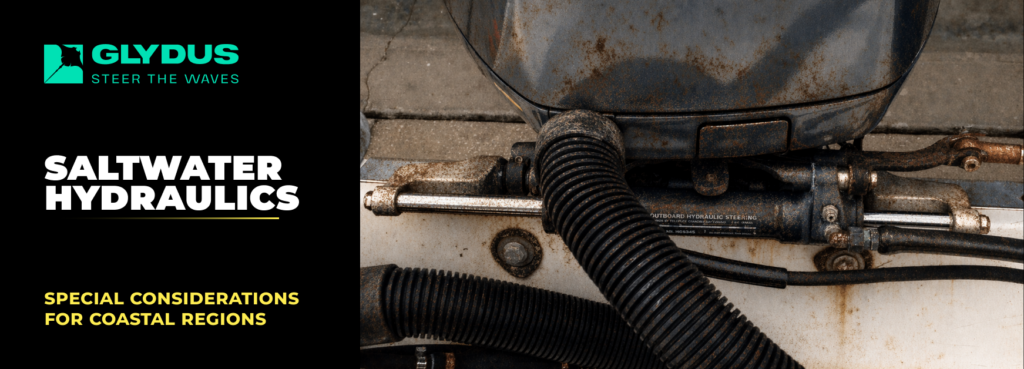
Learn how stainless steel connectors, protective coatings, and 2.5–5 year hose replacement intervals keep saltwater hydraulic steering systems reliable in coastal regions through a marine-specific maintenance approach.
Saltwater is one of the toughest environments for any hydraulic steering system, especially in coastal regions. A hydraulic steering setup must be built and maintained, keeping corrosion, safety, and reliability in mind.
Saltwater quickly attacks unprotected metals, so high‑grade stainless steel connectors and fittings are essential around helms, cylinders, and junction points. Using 316L Marine Grade stainless steel for components adds another layer of reliability to the Glydus Steering System. It helps resist pitting, surface rust, and seizure in harsh coastal climates. Pairing stainless hardware with quality hydraulic hose and correctly specified seals reduces the risk of leaks and sudden steering failures offshore.
Even the best hoses age faster in a salt-laden environment. UV exposure, heat, and constant motion slowly degrade outer jackets and internal reinforcement. For coastal and blue‑water boats, a prudent rule of thumb is to inspect hoses at every service and plan proactive replacement roughly every 2.5–5 years, depending on usage intensity and storage conditions. Any sign of cracking, blistering, stiffness, or corrosion at end fittings is a signal to replace them before a failure happens at sea. Consider Glydus hoses offered with factory crimped end fittings.
A saltwater hydraulic system demands a disciplined, marine‑specific maintenance approach. Rinse exposed steering components with fresh water after trips, check fluid levels and colour regularly, and wipe down stainless areas to remove salt film. Build a
monthly/quarterly/annual checklist that includes bleeding the system if sponginess appears at the wheel, inspecting all connectors, and confirming full, smooth cylinder travel lock‑to‑lock. By treating hydraulics as critical safety gear—not just hardware—coastal and ocean, you can enjoy precise, dependable steering in demanding conditions.

We use cookies to improve your experience on our site. By using our site, you consent to cookies.
Manage your cookie preferences below:
Essential cookies enable basic functions and are necessary for the proper function of the website.
These cookies are needed for adding comments on this website.
Google Tag Manager simplifies the management of marketing tags on your website without code changes.
Statistics cookies collect information anonymously. This information helps us understand how visitors use our website.
Google Analytics is a powerful tool that tracks and analyzes website traffic for informed marketing decisions.
Service URL: policies.google.com (opens in a new window)
Clarity is a web analytics service that tracks and reports website traffic.
Service URL: clarity.microsoft.com (opens in a new window)
Marketing cookies are used to follow visitors to websites. The intention is to show ads that are relevant and engaging to the individual user.
Facebook Pixel is a web analytics service that tracks and reports website traffic.
Service URL: www.facebook.com (opens in a new window)